 Friends of Mlali
For forty-four years, the Mlali Centre has been an oasis for disabled children.
They're treated with dignity, given the hope of recovery, and often for the first time, given community. Friends of Mlali was formed in 2026 to support the Centre's mission.
A three-person board, no salaries, no offices.
The Centre has always relied on outside support. Over the last decade that support has almost entirely dried up. Friends of Mlali was formed in 2026 to solve that problem for good. We raise charitable funds in the United States and, in consultation with the Centre, decide what to fund.
Benjamin Rainford
President
Edward Rainford
Treasurer
Justin Angle
Director
Friends of Mlali is a Montana nonprofit corporation and a 501(c)(3) public charity. Gifts are tax-deductible.
What the Mlali Centre provides.
A home.
Housing, good food, and daily care for all their needs. And, often for the first time, friends.
Treatment.
Wheelchairs and walking frames, physical therapy and club-foot correction by the Ponseti method.
Equipment to take home.
Rural villages have no supplier of mobility equipment. Children leave the Centre with the wheelchair, walking frame, or braces they were fitted for.
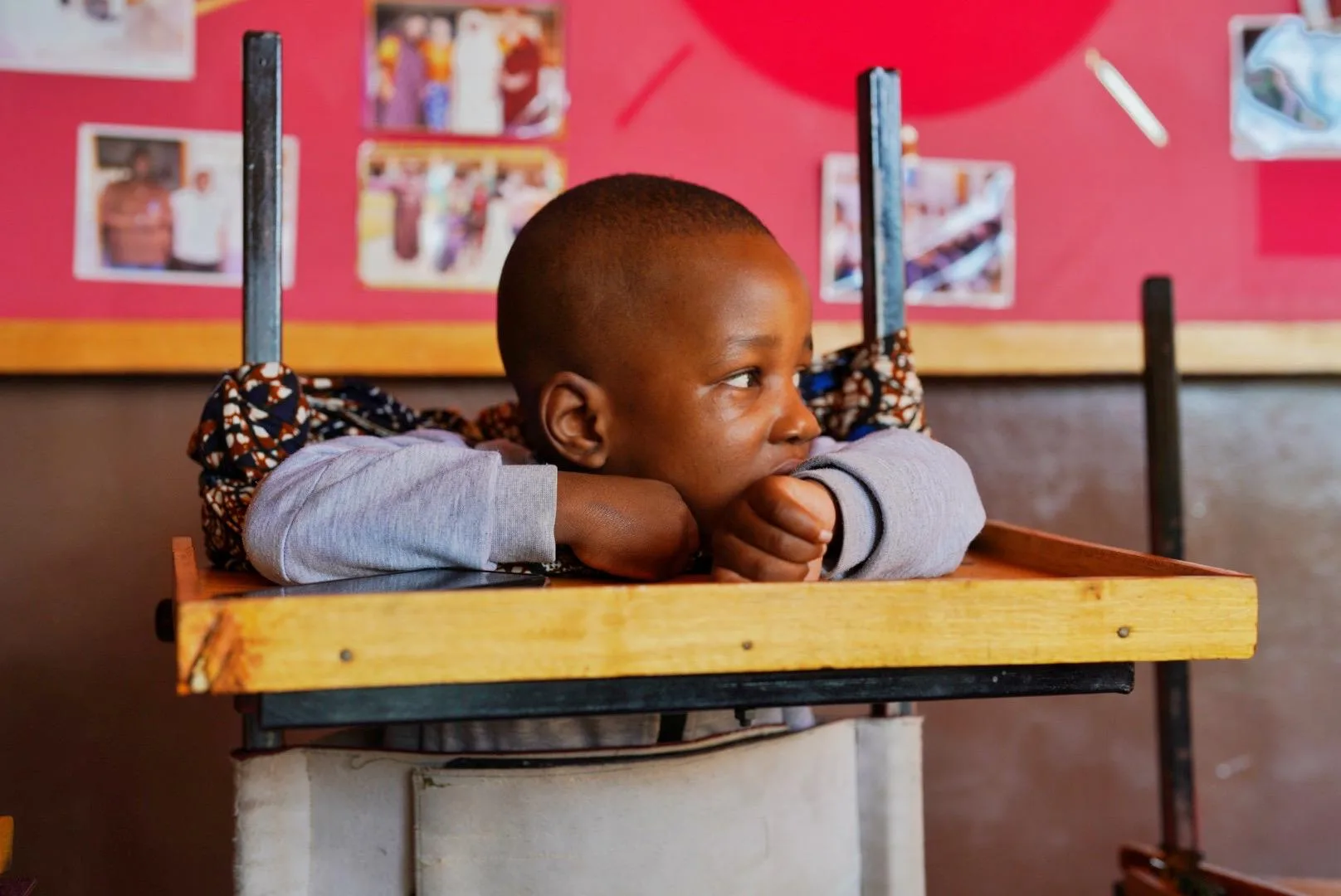
A child with cerebral palsy is strapped upright in a standing frame for treatment. Published with the permission of the Centre.
A second water tank, before the dry season.
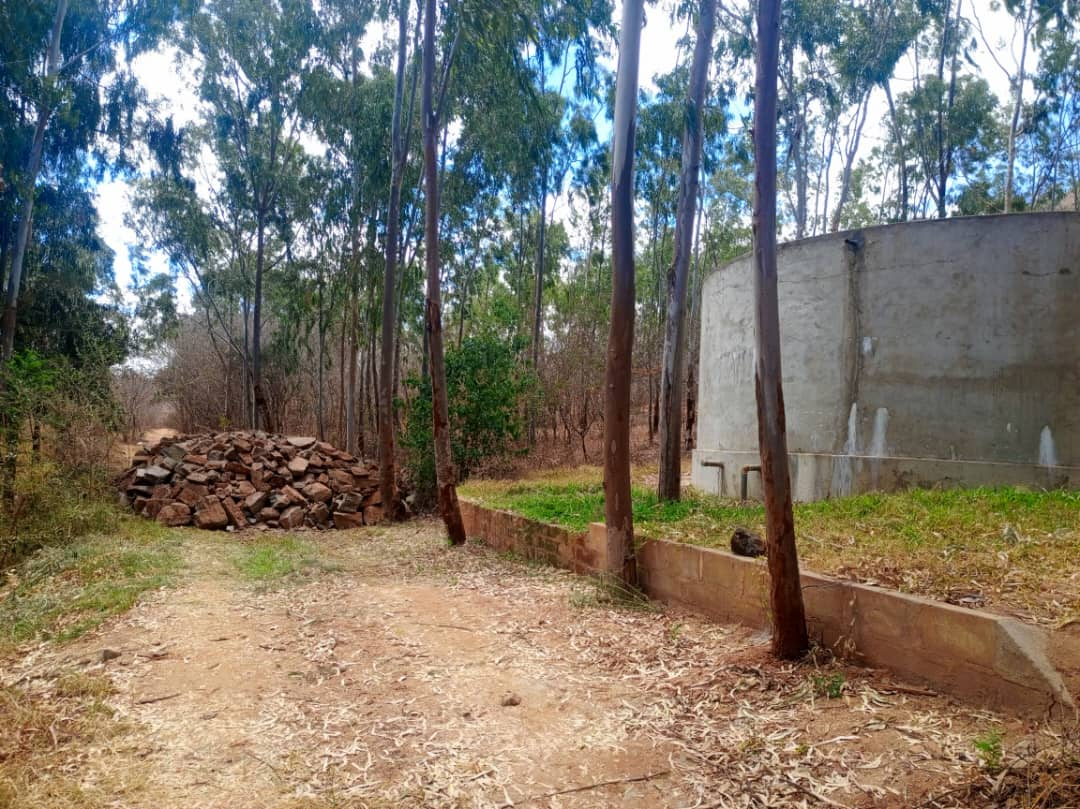
The Centre's water comes from a mountain spring and is stored in a single tank. During the dry season, from August to October, the spring runs low and the tank cannot hold enough to last through most days. When it runs out, everything except bathing the children is put on hold. A second tank is now under construction to ease the shortage, but the Centre needs support to finish it. Every one-time gift goes toward the new tank until it is fully funded.
Schola arrived unable to walk or speak. She now does both.
Schola is six. Her parents separated and her father is largely absent, which leaves her mother, single and providing for four other children, to carry the whole cost of Schola's treatment. She cannot afford it.
When she first arrived, Schola could neither walk nor speak, and would not interact with the other children. Fourteen months later she does all three. The Centre expects a full recovery, and expects her to go home.
Published with the permission of the Centre.
Every transfer, and what it bought.
Our finances are radically transparent. Every dollar is accounted for, and what it accomplished is published.
The Centre's costs do not pause between donations.
Give monthly.
It's the only kind of giving we can plan around.
Read the letters.
A few times a year we write to our donors with photographs and a summary of what their giving paid for.
{{ signupNote }}
Talk to us.
For a larger gift, a foundation grant, or a question about the Centre, get in touch.
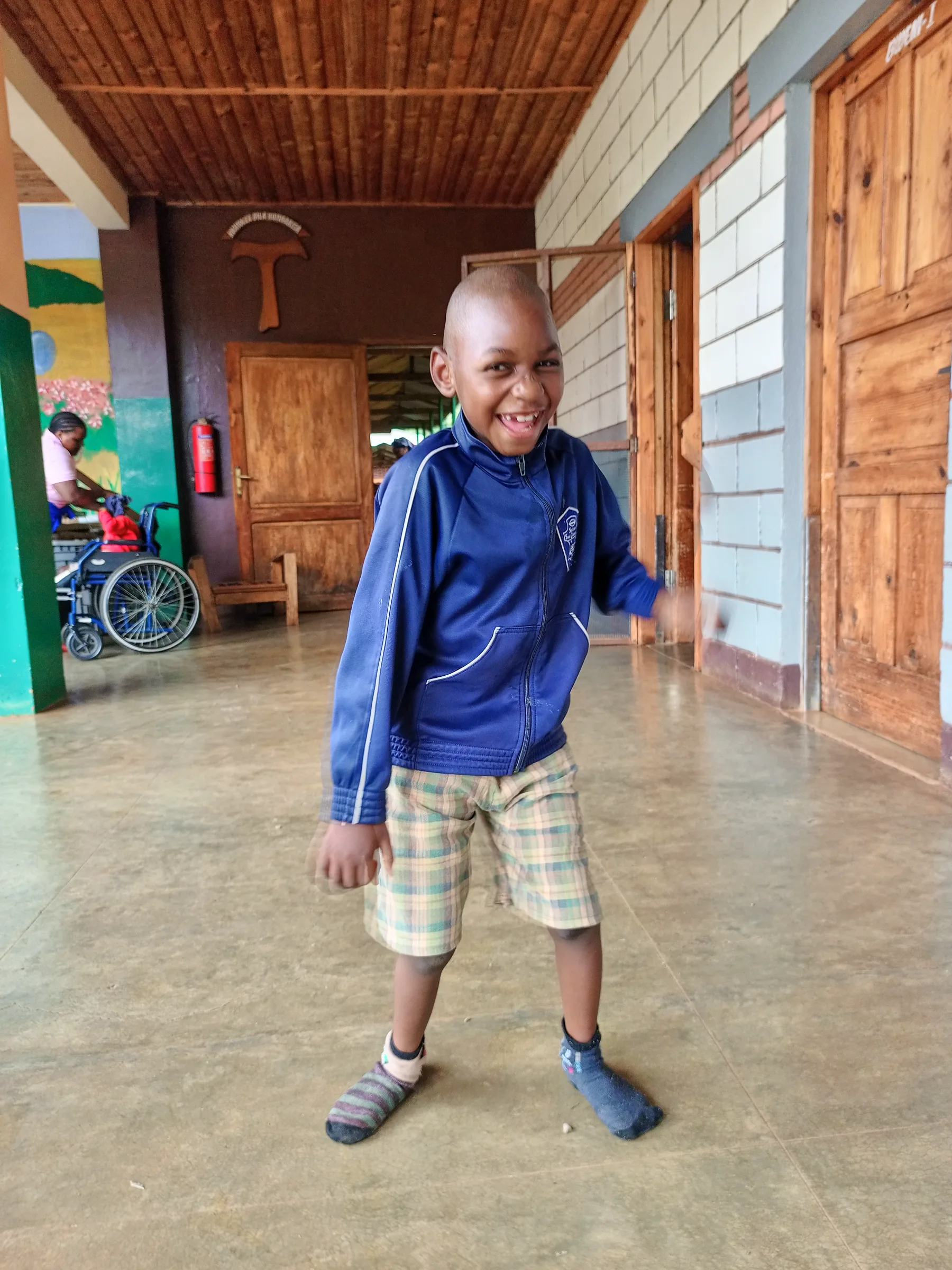
Modrick, eight, has cerebral palsy. He is using the Centre's parallel bars to learn how to walk. Published with the permission of the Centre.
Modrick is learning to walk. You can help pay for that.
For decades, the Centre's funding came from Italy. Due to demographic changes, that money has been shrinking for ten years, and Fr. Gaudence, who runs the Centre, expects it to stop within two. Nothing has replaced it yet.
In the first half of 2026, a month of care for one child at the Centre cost $122. Seventy children live there, and no family is turned away because it cannot pay.
Monthly donations
Ongoing
The children's care and operating costs, month after month. This is the only kind of giving the Centre can plan around.
One-time donations
Autumn
A second water tank for the Centre. Its water comes from a mountain spring, and the one tank it has cannot store enough to last through the dry months.
{{ donorCountLine }}
Processed by Givebutter. A receipt is emailed automatically. Form not loading? Give on Givebutter directly.
Monthly gifts go to the Centre's general costs: staff, food, medical care, and the running of the Centre. The board approves every grant, and every dollar is published in the ledger.
See what donations have paid for →
Friends of Mlali is a Montana nonprofit corporation and 501(c)(3) public charity, EIN 42-4833635. Gifts are tax-deductible to the extent allowed by law.
A licensed children's home and rehabilitation centre, running since 1982.
Twenty-four children live at the Mlali Rehabilitation Centre full time and around seventy are in its care. Children with cerebral palsy, congenital malformations, and club-foot deformities receive housing, medical care, physical therapy, and mobility equipment. No child is turned away for what their family can pay.
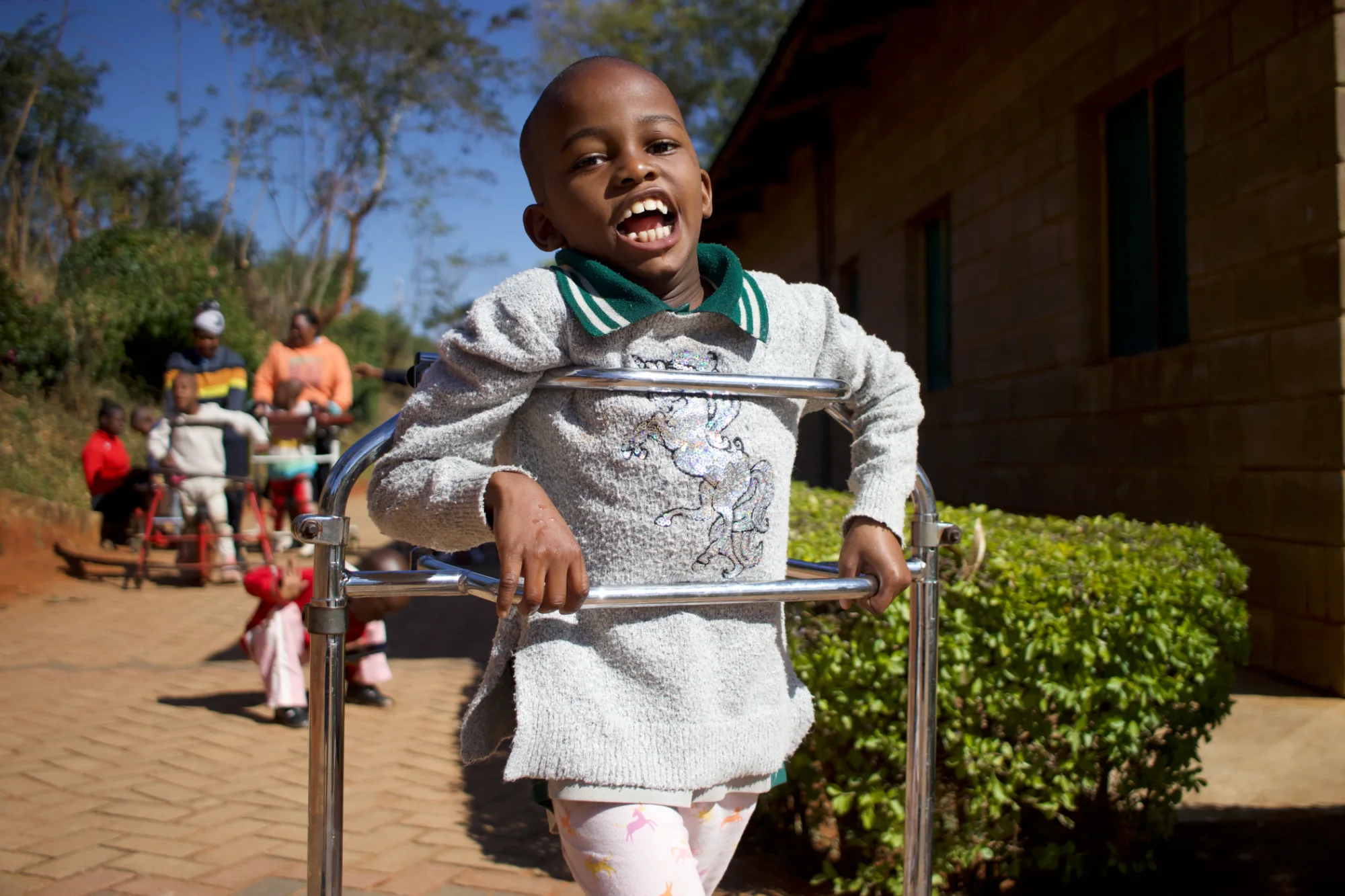
Patricia, six, held upright in a walking frame by a carer. Published with the permission of the Centre.
“To rehabilitate physically disabled children from poor family backgrounds, and give them an improved quality of life and the possibility of independence, through medical care, therapy, and community.”
Mlali Rehabilitation Centre
The Centre provides housing, medical care, daily physical therapy, and the mobility equipment the children take home with them. Most children make significant improvement and return home able to attend school and live with more physical freedom. Ask the children what they love about Mlali and they do not mention the treatment. They mention their friends. At home their disabilities isolate them; here, usually for the first time, they get to play.
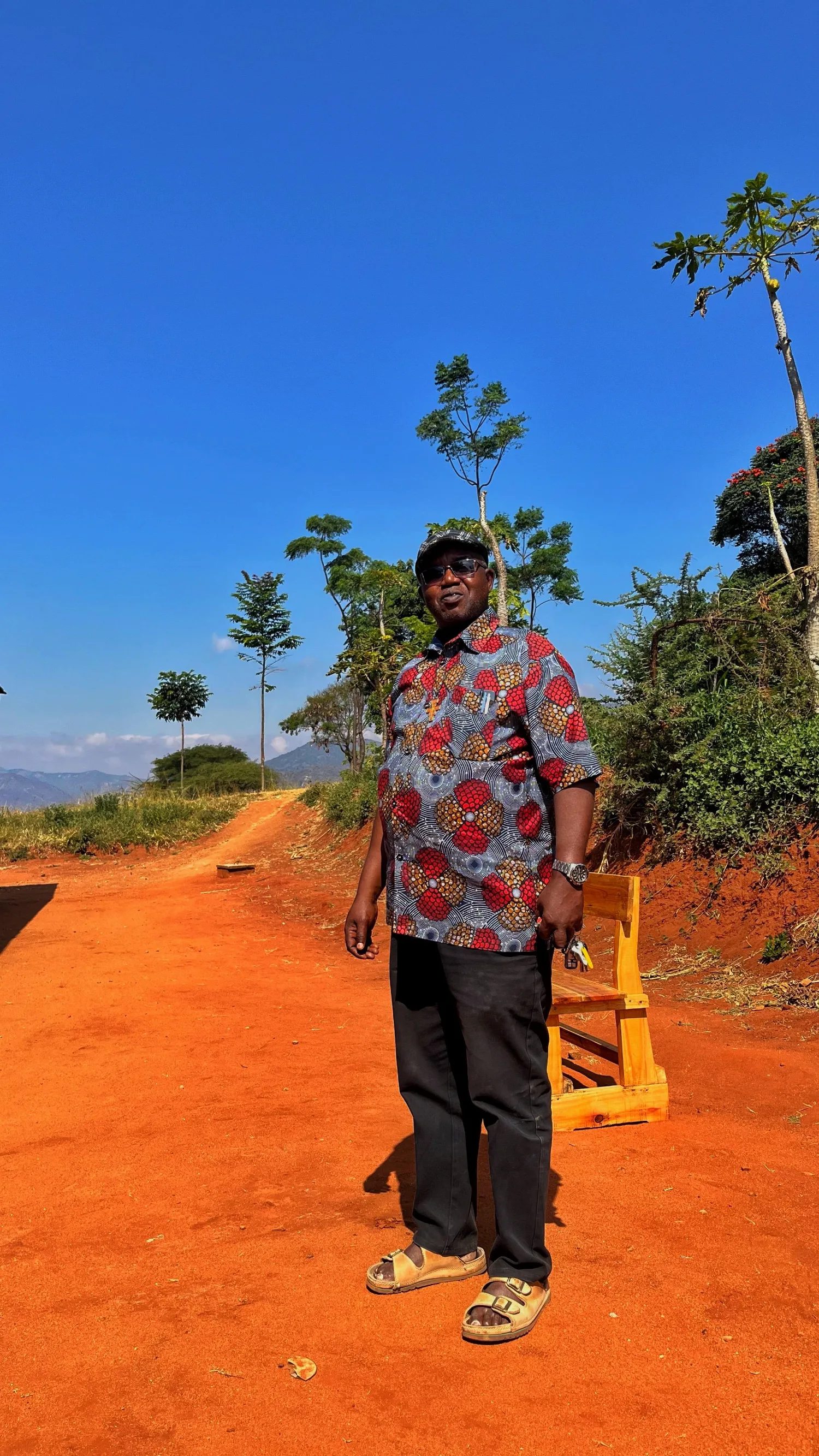
Fr. Gaudence Aikaruwa Shayo, OFM Cap, director of the Centre.
The Capuchin Friars Minor Province of Tanzania.
The Centre is owned and operated by the Capuchin Friars Minor Province of Tanzania. Fr. Gaudence Aikaruwa is a Capuchin of thirty-eight years. He has directed the Centre for more than two decades, and every request we fund comes directly from him.
Mlali is Tanzania's Capuchin formation house. Young friars spend their formation year here, working alongside the children.
Volunteers from Italy, France, and the United States assist with rehabilitation, construction, and farm work.
Treatment, not charity in the abstract.
Daily physical therapy.
Most of the children have cerebral palsy, which stiffens muscles and pulls joints out of position. Left alone the damage becomes permanent, but daily treatment holds it off, and can significantly improve mobility. The villages these children come from almost never offer this care.
Club-foot correction.
The Centre's staff Doctor uses the Ponseti method: a series of serial castings and bracing to correct the damaged foot. If the treatment is started early, this method corrects the deformity in over 90% of cases, and a child gains for life the ability to walk.
Equipment to take home.
Rural villages in Tanzania have no suppliers of mobility equipment. The Centre sends them home with the wheelchair, walking frame, or braces they were fitted for, so they can get to school, play with their friends, and keep recovering.
Forty-four years, six things worth knowing.
Built by the Capuchins, and open ever since.
Fr. Angelo Simonetti, an Italian friar who had worked with disabled children in Ethiopia, saw the same need in Tanzania. He began building on 168 acres outside Mlali. The first children arrived in 1990.
Fr. Gaudence takes over, and is licensed to do it.
A Capuchin friar of thirty-eight years, and still the director today. Under him the Centre became largely self-sustaining: corn, beans, and vegetables from its own fields, water from the spring, electricity from solar. It is registered with the Tanzanian government as a children's home (No. 0006137): inspected and permitted to take children into residential care.
Hundreds of children, and some who stayed.
Most children recover and go back home to their families. The first child the Centre admitted, Bakari Hamisi, recovered and never left. Today he is known as the Centre's “trustworthy gardener.”
The outside funding dries up.
For decades the Centre's funding came from Italy. Due to demographic changes, that money has been drying up, and Fr. Gaudence expects it to cease entirely within two years. Support from within Tanzania continues, but it is stretched across many communities; what it can send keeps the Centre afloat rather than comfortable.
$9,500 raised and sent to the Centre.
Nineteen wheelchairs, nine walking frames, six standing frames, and diapers for the first time in years, then a replacement solar hot water system. Both published in full, with photographs.
Friends of Mlali incorporates.
The first two grants came from a small community and proved the model works: money raised here reaches the Centre and turns into equipment and care within weeks. Friends of Mlali was incorporated to grow that into a permanent base of American donors, so the Centre can plan on income it can count on every month.
Care that lets children grow stronger and return home.
For over forty years, the Centre has provided care and rehabilitation to children with physical disabilities. Monthly gifts fund the daily work that makes this possible.
$122 covers one child for a month: housing, food, medical care, and daily therapy.
Every transfer, and what it bought.
This is every dollar we have raised and what it bought.
Funds raised through August 2026 were held and wired by a fiscal sponsor.
Who decides.
The board approves every grant, in consultation with Fr. Gaudence.
What we require back.
The Centre sends back a written account of what the funds bought, receipts, and photographs.
The next line on this page is the one you fund.
Give monthly so the Centre can plan on it.
One of the clinic rooms, [month] 2026. Published with the permission of the Centre.
The clinic is built.
It has no beds in it.
During Covid the Centre began to build a clinic, funded by generous donors. They finished the structure, but donations dried up before they could buy the equipment that would make it operational. It runs as a licensed pharmacy today. It has the potential to be much more.
The building has three rooms for general care that could hold eight beds each, and a maternity ward with four rooms. The maternity ward matters most, because women in the villages around Mlali don't usually give birth in a safe, medical environment. The closest hospital is a lengthy drive, and Fr. Gaudence says some of them travel by motorbike when labor starts. Opened, the clinic would serve Mlali and the villages around it, with care otherwise very challenging to get.
The staff are there; a doctor, two nurses, and a religious sister who is a trained nurse and runs the licensed pharmacy. The Centre built apartments for them so they can live at the Centre without worrying about housing.
The structure was built to Ministry of Health specifications, so it can be licensed and opened as soon as the equipment arrives.
Fr. Gaudence walks through the building room by room, explaining what is finished and what still needs to be done.
Dotted figures come from an itemized quotation from K Scientific Supplies Ltd in Dar es Salaam. A re-quote is outstanding and will move all of them. Receipts get published when it is bought, the same as everything else.
Not quoted yet: the licence upgrade and a year of staffing, since births happen at night and the ward has to be covered around the clock. Both go in this table before we ask anyone to fund them.
$456 buys a delivery bed.
Everything on this page is one purchase away from being used.
Gifts on this page are restricted to the clinic. If the ward is fully funded we will write and ask you before your gift is used for anything else. Every dollar we send is published in the ledger, receipt by receipt.
A three-person board, no salaries, no offices.
Friends of Mlali exists to raise charitable funds for the Mlali Rehabilitation Centre and to account for what they purchase. We help fund the Centre, but its governance and daily operations remain with them.
Benjamin Rainford
President & Founder
Ben has volunteered at the Mlali Centre twice and began fundraising for it after his second visit. He graduated from the University of Montana in spring 2026 and founded Friends of Mlali that September. He is currently volunteering in the South Bronx with the CFRs.
Edward Rainford
Treasurer
[VERIFY: two or three sentences on background, and anything relevant to holding the books.]
Justin Angle
Director
Justin Angle is Professor of Marketing at the University of Montana and the Poe Family Distinguished Faculty Fellow. He is the creator and host of the College of Business podcast and the Montana Public Radio program A New Angle. Justin directed Ben as he fundraised for the Mlali Centre as his senior Honors Capstone.
Every transfer follows the same four steps.
Fr. Gaudence tells us what the Centre needs and what it will cost.
The board approves the grant and the amount.
The funds are wired, and the Centre accounts for how they were spent.
That account becomes a quarterly letter to donors and goes in the ledger.
Operated by the Capuchin Friars Minor Province of Tanzania. Directed by Fr. Gaudence Aikaruwa Shayo, OFM Cap. Licensed as a children's home, No. 0006137.
Montana nonprofit corporation, incorporated August 2026. EIN 42-4833635. 501(c)(3) public charity. Our first Form 990 will be filed after our first fiscal year closes, and published here.
info@friendsofmlali.org
(406) 640-6727
643 Denver St Ste 100
Whitefish, MT 59937
What the money did, in full.
A few times a year we write to our donors with photographs and a summary of what their giving paid for. Every letter we have sent is kept here.
Get the next one.
A few times a year we write to our donors with photographs and a summary of what their giving paid for.
{{ signupNote }}
The first round of support
Last summer in Dar es Salaam, Fr. Gaudence told me the Centre's outside funding had dried up. What they needed most was a new tractor. But a tractor is one large purchase dependent on grants, so in order to make headway, we identified needs we could meet sooner. We settled on three things the children needed most: wheelchairs, walking frames, and standing frames. The Centre already had some of this equipment, but not enough, and what they did have was old, worn out, and borderline useless. The shortage strained their daily work and limited any hope of taking on more children.
A quick aside. While applying for grants to fund the tractor, one foundation invited us to submit a full application, which required endorsement letters from the Archbishop of Dodoma and a Capuchin Superior in Tanzania. The Archbishop wrote his without hesitation. The Superior, however, took his time, and the day before the deadline we learned why: his own community had applied for the same grant. He declined to write the letter, but instead gave us a tractor. He knew of a recently closed farm with an idle one, and had it sent to Mlali.
With the tractor out of the way, we turned to the other needs. In early July, Fr. Gaudence received a first wire transfer, and in due course purchased nine walking frames, six standing frames, and nineteen wheelchairs. On July 14th he sent photos and videos of the equipment arriving at the Centre, as well as a thank-you video. While talking about the first transfer, he mentioned he'd been able to buy diapers, and lots of them, for the first time in a decade. Never in my life had I thought of diapers as a luxury item. Nor had I noticed, while in Mlali, that they didn't have any.
The equipment arriving at the Centre, 14 July 2026.
We also funded three months of child sponsorship. The Centre often takes in children whose families cannot afford treatment, and after decades of doing so, Fr. Gaudence has no way to know how much has gone unpaid. The programme has donors cover the cost, around $76 a month per child, so that the Centre no longer foots the bill.
More recently, I sent a second round of funding toward a new solar hot water system. The old one was installed twenty years ago and recently failed, leaving the Centre without hot water. Until the new system is in, workers boil water in the kitchen and carry it across to the dormitories to bathe the children and themselves. We expect updates in the coming weeks.
In response to this support, Fr. Gaudence wrote a personal note to donors:
“Our center offers service to children who are physically disabled, either from birth or who happen to be so after birth for a reason or another. Most of these children belong to low-income families with very little possibility to pay for rehabilitation services offered in our Governmental and privately sponsored hospitals. With the donations received, we have been able to purchase new wheelchairs, standing as well as walking frames. These newly bought support instruments have replaced the old ones that were both worn-out as well as insufficient in number. Indeed, they did not match with the current number of children receiving our services.”
“This support has reached us at a time when we were really at a standstill. We sincerely extend our thanks and gratitude to all men and women of good will who have so greatly and generously supported us. May God bless and reward each one of them.”
Fr. Gaudence Aikaruwa Shayo, OFM Cap
Director, Mlali Rehabilitation Centre for Children
While the smaller needs have been met, our work isn't done. The Centre recently finished building a clinic. Years ago a US donor funded the structure, with talk of more once it was up. It's built now, but that donor hasn't been able to proceed. The building already operates as a pharmacy, and as a dental clinic when Italian volunteers are on hand, but there's room for general care and, most of all, a maternity ward. Unsafe childbirth is one of the biggest problems in the villages around Mlali, and Fr. Gaudence wants to fix it. Encouraged by the support so far, we're turning to the clinic project next.
Until then, the most useful thing anyone can do is give monthly. A month of one child's care is $76, and a gift the Centre can count on takes that weight off it for good.
With sincere gratitude,
Ben Rainford
This letter originally said nine standing frames. It was six. It also described child sponsorship at $76 a month. Friends of Mlali no longer offers sponsorship: gifts are unrestricted and go to the Centre's general operating costs. The $1,824 committed here has been redesignated accordingly, and the next letter will say so.
Commonly asked questions.
Can't find what you're looking for? Contact us at info@friendsofmlali.org.
Who decides what gets funded?
Fr. Gaudence tells us what the Centre needs, and the board approves each grant and the amount. A gift made to a named appeal goes to that appeal, but the board keeps final discretion over every dollar.
How do I know the money arrived?
Every transfer is published in the ledger: the date, the amount, what it bought, and photographs. Donors also receive a quarterly letter with updates from the Centre. To the ledger →
What are you raising for now?
A new water tank that the whole compound relies on, and the Centre's running costs: staff, food, medical care, and the upkeep of the compound.
Is my donation tax-deductible?
Friends of Mlali is a Montana nonprofit corporation, EIN 42-4833635. We are a 501(c)(3) public charity, and gifts are deductible to the extent the law allows.
Can I give by check, wire, stock, or a donor-advised fund?
Yes, you can give by check, wire, stock, or a donor-advised fund grant. Write to info@friendsofmlali.org and we will send further details.
How do I change or stop a monthly gift?
Your receipt email carries a link to manage or cancel your gift. Or write to info@friendsofmlali.org and we will do it for you.
Who runs it?
The Capuchin Friars Minor Province of Tanzania, under Fr. Gaudence Aikaruwa Shayo. Friends of Mlali helps to fund the Centre but is not involved in its operations or governance.
Is it a religious organization?
The Centre is Catholic-run. Children are admitted regardless of faith, and donors need no affiliation of any kind.
How many children live there?
Twenty-four live there full time. Around forty more are on site with their mothers, in three houses the Centre keeps for that purpose. In 2025 it treated 281 children in total, 108 on full board and 173 as out-patients at the club-foot clinic.
What happens to a child who gets better?
They go home. The Centre's goal is to rehabilitate children so they can rejoin their families and their communities, so most are there for a course of treatment, not indefinitely. A child who leaves is sent with the equipment they were fitted for: a wheelchair, a walking frame, or braces.
Can I visit or volunteer?
Medical and dental volunteers are incredibly helpful, and Italian doctors have been coming for years to provide care the Centre could not otherwise offer. If you are a doctor, dentist, physical therapist, or nurse and want to volunteer, write to us and we will put you in touch with Fr. Gaudence.
info@friendsofmlali.org · (406) 640-6727
We collect as little as we can.
Friends of Mlali is a small volunteer organization. We do not sell anything to anyone, and there is no marketing operation behind this website.
What we collect
If you give. Your name, email, mailing address, and the amount and date of your gift. Payment card details go directly to Givebutter, our payment processor. They never reach us and we cannot see them.
If you subscribe to letters. Your email address, and whether you opened the letter we sent.
If you write to us. Whatever you put in the message, kept in our email like any other correspondence.
What we do with it
We use it to process your gift, send you a receipt, send you the letters you asked for, and comply with the record-keeping a US nonprofit is required to do. That is the whole list.
We do not sell, rent, trade, or share your information with other organizations, and we do not run advertising on it. We publish donor names only if you have told us we may.
Who else handles it
Two services, each with its own privacy policy: Givebutter, for donations, receipts, and the letters, and Cloudflare, which hosts the site.
Cookies
This site sets no advertising or tracking cookies of its own. The donation form sets what it needs to work.
Children's information
Photographs and stories of children at the Centre are published with the permission of the Centre, which holds guardianship or parental consent. We use first names only and do not publish medical records, locations, or anything that would let a child be contacted. If you are connected to a child shown here and want something removed, write to us and we will take it down.
Your choices
Every letter has an unsubscribe link. You can ask us what we hold about you, ask us to correct it, or ask us to delete it. Write to info@friendsofmlali.org and a person will answer you.
643 Denver St Ste 100
Whitefish, MT 59937
info@friendsofmlali.org · (406) 640-6727
Friends of Mlali, a Montana nonprofit corporation · EIN 42-4833635 · 501(c)(3) public charity; gifts are tax-deductible · The Mlali Centre is licensed as a children's home, No. 0006137